

Published on Oct 20, 2026

A customer centric culture takes shape in the decisions your teams make every day. How does feedback influence what happens next? Are customer needs visible when priorities shift? And do employees have what they need to improve the experience? The answers can reveal a lot about your customer culture and where there’s an opportunity to make it stronger.
What is customer culture?
Customer culture is the shared values, behaviors, processes, and decisions that shape how your organization understands and serves customers. It influences everything from how leaders set priorities to how frontline employees respond when a customer needs help.
The clearest signs of that culture often show up in what teams do with the customer perspective. What happens after customers speak up? Does feedback reach the right teams? Do customer needs factor into decisions? Can employees act when they spot an issue? These everyday choices shape your customer experience culture and show how consistently customer needs stay connected to the business.
What makes a customer culture customer-centric?
A customer-focused culture brings the customer perspective into everyday decisions across the business. Leaders consider customer impact when setting priorities; employees have access to relevant customer insights, and teams understand how their work affects the overall experience. By utilizing customer feedback, teams can gain a clearer view of what needs attention and where changes can make a difference.
A strong customer-centric culture makes that customer focus a shared responsibility. Employees have the support and authority to solve customer problems, while teams across the organization understand their role in shaping customer outcomes. Because customers interact with your brand across teams, channels, and touchpoints, keeping that shared focus helps create a more connected experience and gives employees the insight to act on what customers need.
Why is a customer centric culture important?
A customer centric culture helps teams understand what customers need and create a more consistent experience across the business.
Your organization may be divided by departments, systems, and responsibilities, but customers experience one brand. A frustrating digital journey, a confusing policy, or a difficult service interaction can all shape how they see it.
Keeping the customer perspective visible helps teams connect those moments and make more informed decisions. It can also help recurring feedback travel beyond the team that first hears it, giving leaders and employees across the business a clearer view of where customers are running into friction and where attention is needed.
A strong customer culture can help your organization: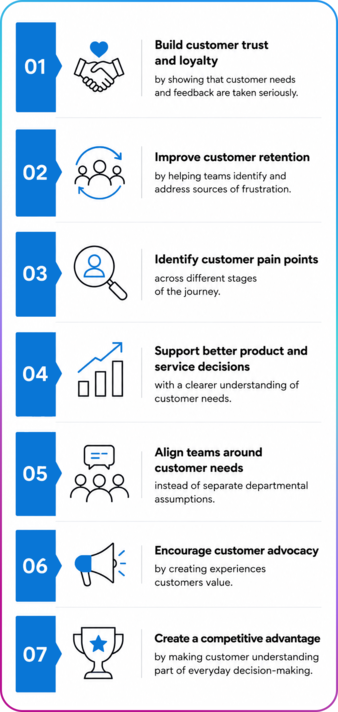
- Build customer trust and loyalty by showing that customer needs and feedback are taken seriously.
- Improve customer retention by helping teams identify and address sources of frustration.
- Identify customer pain points across different stages of the journey.
- Support better product and service decisions with a clearer understanding of customer needs.
- Align teams around customer needs instead of separate departmental assumptions.
- Encourage customer advocacy by creating experiences customers value.
- Create a competitive advantage by making customer understanding part of everyday decision-making.
For leaders, that means a clearer view of what customers need and better context for deciding where teams should focus their attention.
What does a customer-centric culture look like?
A customer-centric culture shows up in how work gets done across the business. Leaders consider customer impact when making decisions, insights reach the teams that can use them, and employees understand how their role shapes the experience. When a problem crosses departments, teams work together to solve it, and frontline employees have the support and authority to address issues without unnecessary roadblocks.
You can also see it in what happens after customers speak up. Recurring feedback gets attention, someone owns the next step, and improvements are tracked to understand whether they made a difference. When customer needs consistently influence decisions, processes, and priorities, customer centricity becomes part of the way your organization operates.
5 Steps to building a customer-centric culture
Building a customer centric culture takes commitment across the business. Leaders need to set the direction, employees need the right customer insights and support to act, and teams need accountability for what happens next.
These 5 steps can help turn customer focus into consistent action across your organization.
1. Define a clear customer-first vision
A clear customer-first vision gives employees a practical understanding of what customer centricity looks like in their day-to-day work.
For frontline teams, that might mean knowing how to respond when an issue comes up. Product teams can use customer feedback to help inform priorities, while leaders keep customer impact in view alongside other business needs. The more specific those expectations are, the easier it is for employees to put customer focus into practice when decisions need to be made.
2. Listen to customers consistently
Consistent customer listening gives you a clearer view of customer needs and pain points across the journey. Surveys, reviews, support conversations, interviews, and behavioural data each add a different piece of the story, helping teams spot recurring friction, understand what customers value, and identify where more attention may be needed. The right mix of feedback sources will look different for every organization.
Consistent listening gives your teams the insight they need to make more informed decisions
3. Share customer insights across teams
Sharing customer insights across teams puts feedback in the hands of the people who can use it. Leadership, product, marketing, operations, and customer service may need different levels of detail, but each team benefits from understanding the customer perspective behind their work. Making relevant insights accessible gives teams a more connected view of the customer and the context to make informed decisions, especially when an issue reaches beyond one function.
4. Empower employees to act
Empowering employees to act gives them the confidence and clarity to respond when customer needs or issues surface. Training, clear expectations, and the right level of decision-making authority help employees understand what they can resolve, which options are available, and when additional support is needed. This is especially important for frontline teams, who often see customer friction as it happens and need a clear path to respond while the experience is still unfolding.
5. Act on feedback and measure results
Acting on customer feedback starts with clear ownership of what happens next. When feedback points to a recurring issue, identify who can address it and what needs to improve, whether that involves a process, communication, product decision, policy, or another part of the experience.
Once a change is made, track the relevant customer outcomes to understand its impact. Share those changes internally so employees can see how customer insight influences decisions and drives action across the business.
Examples of customer centric culture
Examples of customer centric culture come to life in what teams do with customer insight. It can shape how you remove friction from the journey, empower frontline employees to solve problems, and bring feedback across departments to make more informed decisions.
Here are 3 ways a customer-first approach can take shape across your organization.
Improving a customer journey
When customers keep running into friction at the same point in a journey, there’s usually more to learn. Bringing that feedback together can help teams spot the pattern, understand what’s getting in the way, and make a targeted improvement. From there, continued listening helps show whether the change is creating a smoother experience.
Empowering frontline employees
Frontline employees often see customer issues as they happen. With clear guidelines and the right level of authority, they can resolve appropriate problems in the moment instead of sending customers through unnecessary handoffs. Those interactions can also surface recurring friction, giving the broader organization useful insight into where a bigger fix may be needed.
Using customer feedback across departments
The team that hears the feedback isn’t always the team that needs to act on it. Recurring questions in customer service, for example, could point to an issue with a product, process, or communication. Sharing those insights with product, operations, marketing, or leadership gives teams a more connected view of the problem and the context to decide what comes next.
Become Customer Centric with SMG’s Help
Building a customer centric culture gets easier when teams have a clear view of what customers need and a consistent way to act on what they learn. SMG helps organizations connect insights across brand, customer, and employee experience through Unified Experience Management® (UXM), bringing experience data and expertise together so teams can better understand what needs attention and take action where it matters.
Ready to put customer insight to work across your organization? Explore SMG’s customer experience management solutions to strengthen your approach, or schedule a demo to see SMG in action.