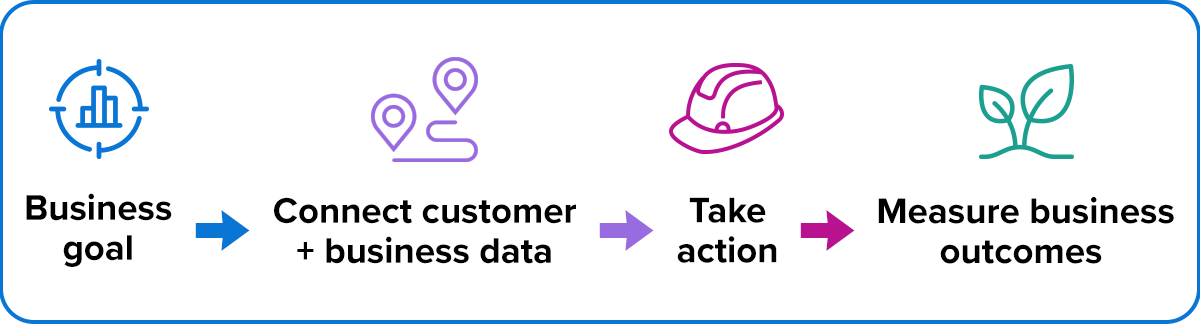
Start with the business decision, not the feedback metric
Once organizations define the outcome they want to achieve, customer feedback can help guide the decisions that move those goals forward.
Instead of asking, "What should we measure?" ask:
- What customer outcome are we trying to improve?
- Where are customers experiencing the most friction?
- Which issues are hurting customer loyalty or repeat business?
- Which locations or teams need additional support?
- Which improvements could have the greatest impact on revenue, efficiency, or customer satisfaction?
Starting with a clear business goal ensures organizations collect the right customer feedback, prioritize meaningful improvements, and connect customer insights to measurable business results.
Identify which outcomes customer feedback should influence
With a clear business goal in place, organizations can use customer feedback to focus on the outcomes that matter most. Whether the priority is increasing revenue, strengthening customer loyalty, improving operational efficiency, or empowering frontline teams, customer insights help identify where to focus improvement efforts.
Some of the most valuable business outcomes customer feedback can influence include:
- Revenue growth: Customer feedback reveals what encourages customers to purchase, return, or spend more.
- Customer loyalty and retention: Customer feedback helps organizations understand what builds trust, encourages repeat business, and strengthens long-term customer loyalty.
- Operational efficiency: Customer insights uncover operational challenges, including long wait times, order inaccuracies, staffing gaps, and inconsistent processes.
- Frontline performance: Customer feedback helps managers identify coaching opportunities, recognize high-performing teams, and improve consistency across locations.
- Brand perception: Customer feedback reveals whether CX align with the brand promise, helping organizations strengthen their perceptions of value, quality, convenience, and trust.
Connect what customers say with what they do
Customer feedback tells you how customers perceive their experiences. Connecting it with behavioral data, such as purchase patterns, digital interactions, and repeat visits, helps explain why those experiences occur and provides a more complete view of the CX.
For example, customer feedback may reveal frustration with the checkout experience, while digital behavior shows an increase in cart abandonment. Or customers may report slow service, with operational data confirming longer wait times. Together, these insights provide a clearer picture of what's driving customer friction, helping organizations identify root causes and prioritize improvements.
Connecting customer feedback with behavioral data helps organizations better understand how CX influences revenue, customer loyalty, and business performance.
Link feedback to operational and financial data
As McKinsey notes, organizations create more value from CX measurement when customer feedback is connected to broader business outcomes.
Viewing customer feedback alongside metrics such as revenue, customer retention, operational efficiency, conversion rates, and location performance makes it easier to identify what's driving results and where business risk exists.
For example, declining satisfaction scores may align with lower repeat visits, while complaints about long wait times may coincide with operational bottlenecks. Positive feedback about knowledgeable employees may correlate with stronger customer loyalty or increased sales. Looking at these insights together helps leaders prioritize improvements with the greatest business impact.
Make feedback actionable at the location level
Connecting customer feedback with business data helps organizations understand where action is needed. The next step is ensuring those insights reach the people who can act on them.
Customer feedback creates the most value when it reaches the people responsible for delivering the experience. For multi-location organizations, that means giving the right insights to the right locations, managers, and frontline teams.
Location-level insights help leaders identify where support is needed, where recurring issues are emerging, and which teams are delivering exceptional experiences. This makes it easier to prioritize coaching, address operational challenges, recognize high-performing teams, and improve consistency across locations.
Turn customer feedback into ownership and action
Turning customer insights into lasting improvements starts with assigning ownership. Defining who is responsible for responding to feedback helps organizations coordinate action, prioritize the highest-impact opportunities, and measure progress over time.
Some issues can be resolved locally, while others require regional or enterprise-wide action. Clear ownership helps teams respond consistently, focus on the highest priorities, and deliver meaningful improvements.
Communicating the changes made in response to customer feedback shows customers their voices are heard, builds trust, and reinforces the value of sharing their experiences.
Use AI to prioritize what matters most
As customer feedback volumes grow, identifying the insights that deserve immediate attention becomes increasingly difficult. AI helps teams identify priorities and focus on the actions with the greatest business impact.
AI-powered tools analyze customer feedback, detect emerging themes, and surface recurring issues across surveys, reviews, and other listening channels. Instead of manually reviewing every response, teams can identify patterns and focus on the feedback most likely to influence business outcomes. As SurveyMonkey explains, identifying meaningful trends helps organizations turn customer feedback into action.
Platforms like Ignite® put those AI-powered insights into practice by surfacing emerging themes, prioritizing critical issues, and delivering actionable insights to the right teams. Combined with human expertise and business context, Ignite® helps organizations respond faster and act with greater confidence.
Measure whether action improved the outcome
Taking action is only part of the process. Measuring the results helps organizations understand what's working, identify opportunities for improvement, and make better decisions over time.
When measuring the impact of customer-driven improvements:
- Identify the right success metrics. Track KPIs tied to the business outcome you're trying to improve.
- Establish a baseline. Measure performance before making changes so you can accurately evaluate their impact.
- Measure customer and business outcomes together. Compare customer feedback with operational and financial metrics.
- Evaluate the results over time. Track trends to determine whether improvements are creating lasting change.
- Continue listening to customers. Follow-up feedback helps validate improvements and identify where additional action is needed.
How SMG helps brands connect feedback to business outcomes
SMG helps organizations connect customer feedback to business outcomes through Unified Experience Management® (UXM), bringing customer, employee, brand, digital, social, and operational signals together in one place to support better business decisions.
Ignite helps teams turn those insights into action with AI-powered analysis, location-level insights, and actionable recommendations that help leaders respond faster and improve business performance.
Frequently asked questions about connecting customer feedback to business outcome
How does customer feedback connect to business outcomes?
Customer feedback connects to business outcomes by helping organizations understand how CX influence results like customer loyalty, revenue, retention, and operational performance. When customer feedback is combined with behavioral, operational, and financial data, organizations can identify the improvements that have the greatest impact on both customers and the business.
What business outcomes can customer feedback improve?
Customer feedback helps organizations uncover customer pain points, operational inefficiencies, and opportunities for improvement. Acting on those insights can strengthen customer loyalty, improve operational performance, increase revenue, and create more consistent CX.
Why is customer feedback hard to act on?
Customer feedback is often difficult to act on because the data lives in silos, lacks clear ownership, and isn't connected to operational or business data. Many organizations also rely on dashboards and reports without establishing clear processes for turning customer insights into meaningful action.
How can brands make customer feedback more actionable?
Brands can make customer feedback more actionable by starting with the business decision they need to make, prioritizing the insights that matter most, and assigning clear ownership for follow-up. Connecting customer feedback with operational data, financial performance, and location-level insights also helps teams identify where action is needed and measure the results over time.
How does AI help connect customer feedback to business outcomes?
AI helps organizations connect customer feedback to business outcomes by identifying recurring themes, detecting emerging issues, prioritizing feedback based on urgency and business impact, and surfacing the customer signals most likely to influence performance. Combined with human expertise and business context, AI enables teams to focus on the improvements that create the greatest value for customers and the business.
---
Ready to connect customer feedback to clearer action and measurable business impact? Learn how SMG helps organizations bring customer, employee, brand, digital, social, and operational signals together.