

Published on Nov 10, 2026
Most convenience store trips happen fast. A driver fills up, grabs a coffee, and gets back on the road, often stopping at whichever store is closest. With several competing stores nearby offering similar products and competitive fuel prices, what's keeping that customer from going somewhere else next time?
A convenience store loyalty program gives customers an incentive to choose your location over the competition. But turning loyalty rewards into repeat customer visits takes more than enrollment. Rewards need to feel worthwhile, fit customers' routines, and be easy to use when they're in a hurry. The real test is whether your program influences the behaviors that matter most to your business, from fuel-to-store conversion and getting more customers inside to basket building and increasing in-store spend.
What is a convenience store loyalty program?
A convenience store loyalty program rewards customers for qualifying fuel and in-store purchases through points, fuel discounts, and other incentives. The goal is to encourage repeat visits, increase inside conversion, and build stronger purchasing habits across the forecourt and store.
C-store shoppers often make frequent, smaller purchases, so rewards need to reflect those habits. A coffee regular may expect to earn a reward within a few visits. Fuel discounts or food offers can also encourage customers who usually stop at the pump to shop inside.
Why c-store loyalty programs matter
When the competition is across the street, the experience you offer can decide where customers stop.
According to NACS Magazine's research, 82% of consumers said they would drive five minutes out of their way for a store they like more, compared with 69% who would do the same for a 5-cent-per-gallon fuel discount. And loyalty programs are already part of the picture: Another NACS study found that 77.2% of respondents belonged to a convenience store loyalty program.
For convenience retailers, a loyalty program creates opportunities to:
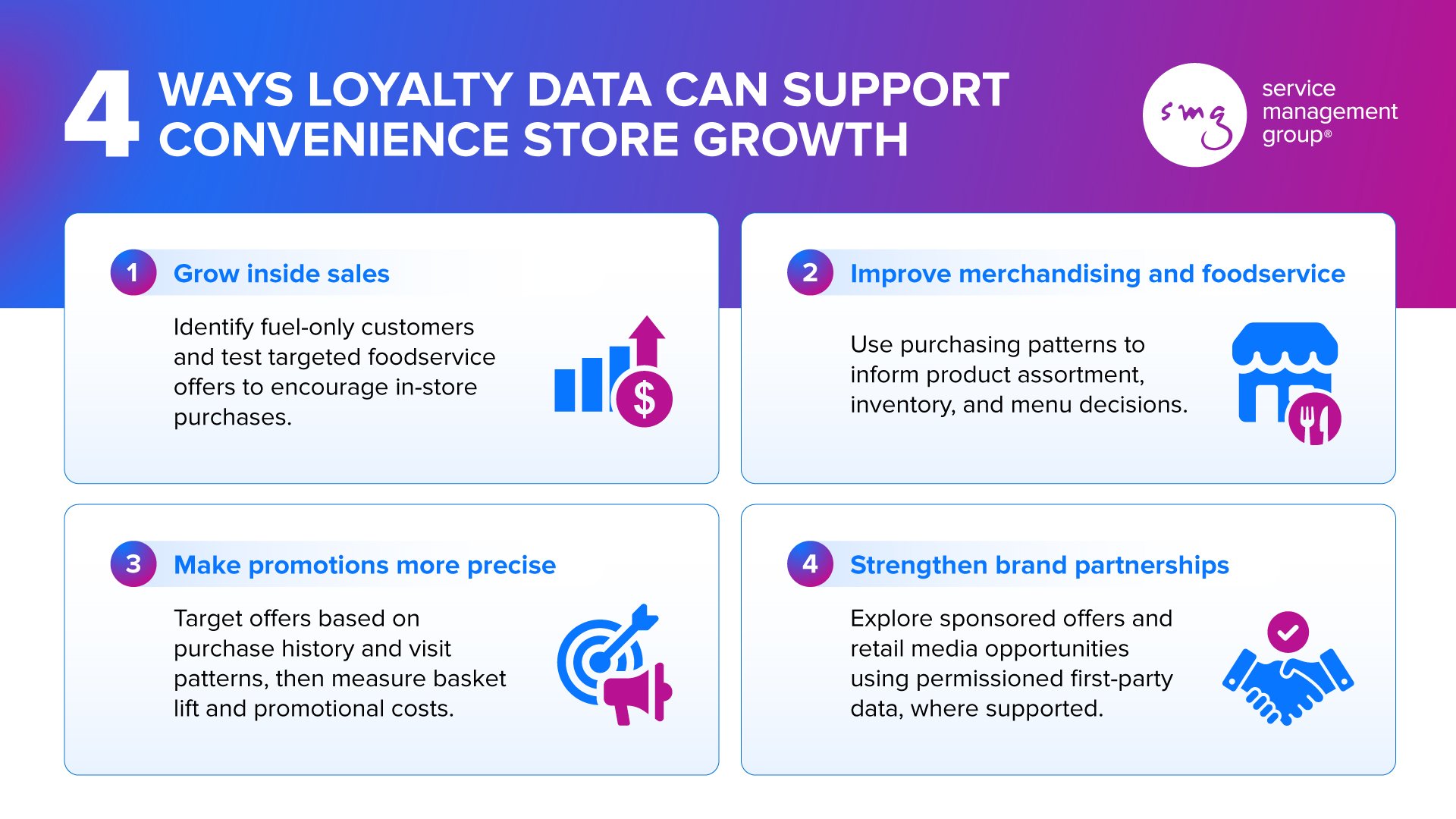
- Make promotions more precise: Use purchasing patterns to target relevant offers, reduce unnecessary discounting, and help protect margins.
- Improve merchandising and foodservice decisions: Identify customer preferences to inform product assortment, inventory, and foodservice offerings.
- Grow inside sales: Encourage fuel customers to shop inside and use personalized offers to support basket building.
- Create direct customer connections: Use loyalty channels to share relevant offers and support services like order-ahead and mobile payment, where available.
- Build value for brand partners: Use loyalty insights to inform sponsored promotions and potential retail media opportunities.
There's room to bring more fuel customers inside, too. According to research on fuel-only shoppers, 24.7% identified loyalty or rewards programs as something that would encourage them to shop inside.
Types of loyalty programs for convenience stores
The right loyalty program depends on how your customers shop and what your objectives are, whether that's more frequent fuel stops, bigger in-store baskets, or both. Different reward structures can help you target those behaviors.
Common loyalty programs for convenience stores include:
- Points-based programs: Earn points on qualifying purchases and redeem them for discounts or free products.
- Tiered programs: Earn perks after reaching spending or visit milestones.
- Fuel reward programs: Earn fuel discounts through eligible purchases.
- Digital punch cards: Buy five coffees, get the sixth free.
- Hybrid programs: Combine reward models across purchase categories.
Points-based and fuel rewards are common c-store models. Choose a structure that reflects customers' purchasing habits and offers rewards your business can sustain.
7 ways to build and improve your convenience store loyalty program
Enrollment shows how many customers joined. Keeping them active takes a closer look at how members use rewards, what brings them back, and where the experience breaks down.
1. Use customer data to identify growth opportunities
Use transaction and loyalty data to identify opportunities for basket building, inside conversion, and more targeted promotions. Look at when members visit, what they buy together, and which fuel-only customers could be encouraged to shop inside.
Start with three questions:
- Which products are frequently purchased together, and when?
- Which fuel-only customers could be encouraged to shop inside?
- Where could targeted offers increase basket size without unnecessary discounting?
If morning coffee customers frequently purchase breakfast sandwiches, test a bundled reward to encourage basket building. Compare purchasing patterns before and after the offer, ideally against a similar group that didn't receive it, to see whether the promotion influenced purchasing behavior.
2. Keep your reward program simple
Customers shouldn't have to hold up the checkout line figuring out how to redeem a free coffee.
Make enrollment easy at the pump, register, or in the app. Keep earning rules clear and rewards achievable within a reasonable number of visits. A free coffee after five qualifying purchases gives members a straightforward goal.
Check whether customers can track their progress, understand eligible purchases, and redeem rewards without slowing checkout.
Confusing redemption rules, clunky apps, and low-value rewards can quickly turn customers off. These frustrations are common themes found in what customers value most in loyalty programs, and they're worth watching for in your own c-store loyalty program.
3. Make it mobile-first
A loyalty app should make quick stops easier, whether customers are checking personalized offers, ordering ahead, or paying for their purchases. Focus on making these interactions fast and intuitive, where those features are available.
Mobile apps can give customers another reason to stop, with two-thirds of surveyed U.S. and U.K. consumers agreeing that apps encourage visits. But convenience store traffic trends also point to a potential stumbling block: trouble redeeming points or rewards can make customers less willing to return.
Test the redemption process from start to finish. Check whether rewards are easy to find, eligibility rules are clear, and coupons scan correctly at checkout.
4. Add tiered rewards for your loyal customers
Tiered programs recognize frequent shoppers with bonus points, exclusive deals, or premium rewards. A commuter who buys coffee several mornings a week, for example, could earn an extra benefit after a set number of visits.
Before introducing tiers, review how many members would qualify, what the perks would cost, and whether thresholds reflect actual purchasing habits. Make progress visible so customers know how close they are to the next level.
5. Personalize offers based on shopping habits
Use purchase history, visit patterns, and store-level insights to make promotions more precise without relying on broad discounts that can eat into margins. A morning coffee regular might receive an afternoon snack offer, while a customer who fuels up twice a month could earn bonus points for a third visit.
These same purchasing patterns can inform merchandising and foodservice decisions, from identifying products customers frequently buy together to spotting opportunities to adjust assortment or menu offerings.
Loyalty apps and member accounts also give retailers a direct channel to share targeted offers between visits, with features like order-ahead and mobile payment supporting additional purchase opportunities, where available.
Before launching location-specific promotions, check inventory to make sure customers can actually redeem the rewards they're offered.
6. Collect customer feedback to improve your program
Loyalty data can show which customers purchase fuel only, who shops inside, and how purchasing patterns change over time. Customer feedback adds context to those behaviors, helping retailers understand what brings shoppers inside and what might be keeping others at the pump.
For example, if fuel customers rarely enter the store, feedback could reveal barriers such as long checkout lines, limited foodservice options, or an inconvenient store layout. Pair those insights with purchasing patterns to identify missed sales opportunities and test offers that encourage inside conversion or basket building.
Use short post-visit surveys to learn which rewards customers value, where redemption gets frustrating, and what would improve their experience. Where systems and permissions allow, connect feedback with loyalty activity to investigate recurring issues, from app problems to reward eligibility or checkout delays.
A strong customer experience management approach helps retailers understand what's happening across the forecourt, foodservice counter, and checkout. Use those insights to prioritize improvements, assign ownership, and track whether changes make the experience better.
7. Measure loyalty program effectiveness with the right KPIs
A growing membership list looks promising, but are those customers actually using their rewards and coming back more often? Tracking the right KPIs helps you see where your program is gaining traction and where it needs attention.
Review these metrics monthly:
- Loyalty penetration
- Member visit frequency
- Fuel-to-store conversion
- Average inside basket
- Fuel-to-inside attachment
- Incremental revenue from loyalty promotions
Look at these numbers together. High enrollment paired with low redemption, for example, could signal rewards that are difficult to earn, irrelevant, or confusing to use.
And when measuring incremental revenue, remember that some loyalty members may have been frequent shoppers before joining. Higher member spending alone doesn't mean the program caused it.
Learn how SMG helps gas stations and convenience stores turn customer feedback into actionable insights to encourage repeat visits.
Common c-store loyalty program mistakes to avoid
A reward loses appeal when customers struggle to earn or use it. Watch for these problems:
- Overly complex rules: Confusing calculations and exclusions can discourage participation.
- Rewards that take too long to earn: High thresholds may frustrate frequent shoppers making small purchases.
- Frustrating redemption: App issues and checkout delays make rewards harder to use.
- Unclear data practices: Explain what you collect, how it's used, and how customers can manage marketing preferences.
- No clear performance measures: Establish baseline metrics and track costs to evaluate results.
Employees also need to understand eligibility rules and how to resolve redemption problems. Plan for technology, training, reward costs, and accessible privacy information before launch.
Convenience store loyalty program examples
Loyalty programs can help convenience retailers identify sales opportunities, make smarter store-level decisions, and get more value from customer purchasing patterns. Here are four ways to put that data to work.
Build a Convenience Store Loyalty Program That Keeps Customers Coming Back
A loyalty program might bring a driver back for discounted fuel or a free coffee. Whether that visit becomes a habit can also depend on what happens after they arrive.
A clean restroom, stocked foodservice counter, working rewards app, and smooth checkout all contribute to the experience customers remember. Brand feedback can reveal how customers perceive your locations compared with nearby alternatives, while employee feedback can surface operational challenges that affect the customer experience.
SMG helps convenience and fuel retailers better understand brand, customer, and employee experiences, identify where improvements are needed, and give teams clearer direction on what to address.
Want to know what's bringing customers back and where your stores might be falling short? See how SMG helps retailers improve the convenience and fuel experience, or schedule a demo to discuss what your customer feedback is telling you.